Gallery Three · Exhibit 03
Before the Smartphone
For most of its early life, the mobile phone did one thing: it let a voice travel with you. How people used that single ability, carefully, expensively and sometimes theatrically, reshaped manners long before phones reshaped media.
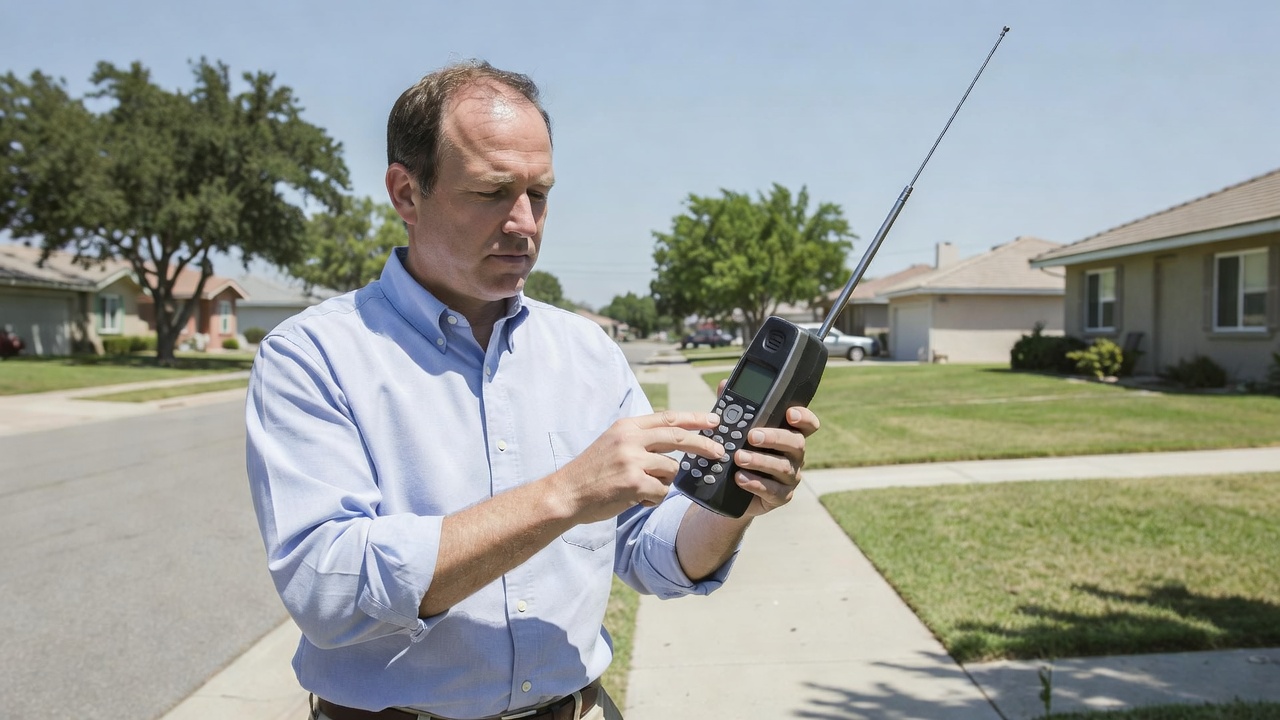
A call from the pavement
On 3 April 1973, Motorola engineer Martin Cooper stood on a New York street and placed a call from a handheld prototype. Ten years later, in 1983, Motorola brought the DynaTAC 8000X to market. It was the first handheld mobile phone sold commercially, and its numbers explain how people used it: about thirty minutes of talk time, roughly ten hours to recharge, and a price of US$3,995.
Nobody browsed on a DynaTAC. Owners used it to confirm deliveries, reach clients between appointments and, occasionally, to be seen using it. Before handhelds, many people met mobile telephony as a car phone bolted beneath the dashboard, or as a "transportable" in a shoulder bag. The phone belonged to a place or a vehicle; the handheld made it belong to a person.
Documented specification
Motorola DynaTAC 8000X
- Launched
- 1983 (United States)
- Talk time
- About 30 minutes
- Recharge
- About 10 hours
- Weight
- Roughly 0.8 kg
- Price
- US$3,995
Recollection
The phone on the restaurant table
"My uncle put it next to his plate like a second guest. It never rang. I think that was almost the point."
Illustrative composite of commonly shared memories
Pagers, numbers and memory
Through the 1980s and 1990s, pagers filled the gap for people who needed to be reachable but could not justify a phone. A pager told you to find a payphone. Users developed shorthand number codes with friends and colleagues, a habit that foreshadowed the compressed language of texting. Meanwhile, people memorised telephone numbers by the dozen, because the phone itself remembered very little and the paper address book stayed at home.
Nine keys and 160 characters
On 3 December 1992, engineer Neil Papworth sent the words "Merry Christmas" from a computer to a mobile phone on the Vodafone network in the United Kingdom, widely recognised as the first SMS. Text messages were limited to 160 characters, a figure associated with the work of Friedhelm Hillebrand on GSM standards. That limit, combined with numeric keypads, produced a new written dialect: abbreviations, dropped vowels and creative punctuation.
Typing meant pressing a key several times to reach a letter, until predictive input such as T9 let a single press per letter suggest whole words. The skill was real and very physical: many users could text without looking, thumb finding keys by touch in a pocket or under a school desk.
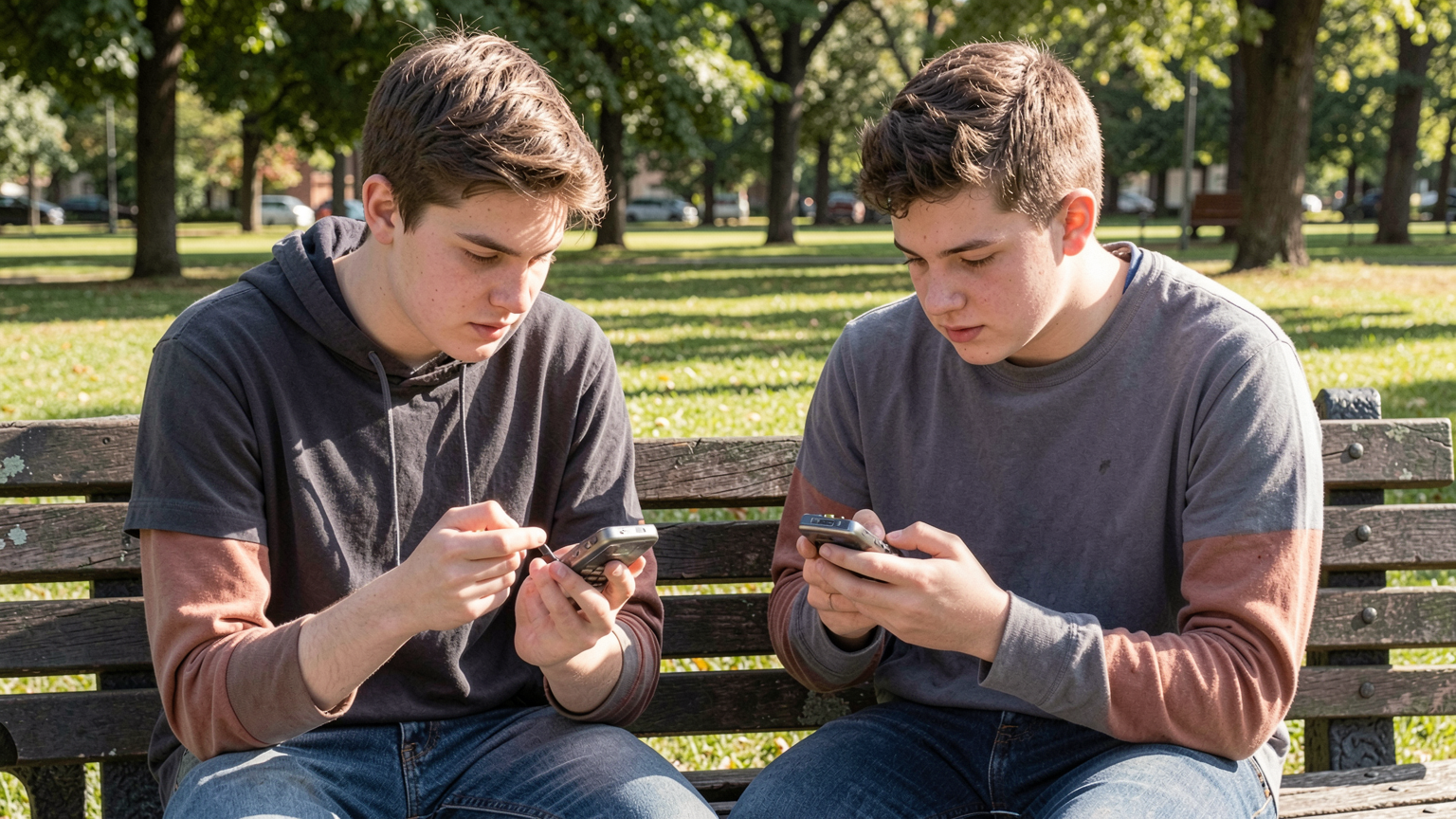
"We charged our phones once a week. Losing the charger wasn't a crisis; losing the phone number of the person you fancied was."
Recollection · illustrative composite
Snap, slide and Snake
Design became personality. Motorola's StarTAC, launched in 1996, popularised the clamshell, and closing it with a snap became a satisfying way to end a call. Nokia's 6110 of 1997 shipped with Snake, giving phones their first widely shared game. The Nokia 3310, released in 2000, became famous for durability, long battery life and swappable covers. Alongside phones, personal digital assistants such as the PalmPilot, launched in 1996, taught people to write a stylised alphabet called Graffiti, while BlackBerry devices from the early 2000s made email something you thumbed on a train.
What we inherited, what we set down
When the iPhone arrived in 2007 and touchscreen smartphones spread, much of this gallery was absorbed into a single object. The brevity of SMS shaped instant messaging; predictive text became autocorrect; emoji, first designed by Shigetaka Kurita for NTT Docomo in 1999, became a global vocabulary. The habit of always being reachable, first sold as a luxury, became an expectation.
Other habits faded: memorised numbers, week-long batteries, user-replaceable batteries and the phone as something you could fully put away. Early phones were not wiser than today's; they were simply narrower. Their limits forced choices, and some people miss having those choices made for them.
Continue the tour
Computing on the Kitchen Table
Cursors, cassettes and type-in listings.
Previous galleryTapes, Cartridges and Play
Portable music and the living-room console.
Next galleryMuseum Desk Answers
Common questions about old phones and storage.
Visit the desk